Ceramic materials power batteries, microchips, and sensors, and their performance traces back to atomic-scale structure. This course connects crystal structure, defect chemistry, and transport into one framework you can apply to real materials.

Structure of Ceramics: Materials Science Fundamentals
Labor Day starts with $70+ in savings on Coursera Plus. Save 40% for 3 months.

Structure of Ceramics: Materials Science Fundamentals

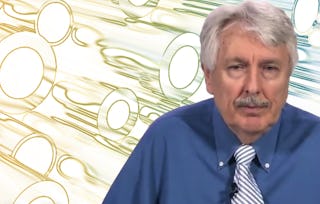
Instructor: Seungbum Hong
Included with Learn more
Gain insight into a topic and learn the fundamentals.
Intermediate level
Recommended experience
1 week to complete
at 10 hours a week
Flexible schedule
Learn at your own pace
What you'll learn
Explain how close-packing and ionic radius rules determine ceramic crystal structures.
Use Kröger-Vink notation to construct and interpret Brouwer diagrams for defects.
Apply the Debye-Hückel correction to model interactions between charged defects.
Analyze diffusion, conductivity, and surface data to evaluate ceramic performance.
Details to know

Shareable certificate
Add to your LinkedIn profile
Recently updated!
August 2026
Taught in English
See how employees at top companies are mastering in-demand skills

There are 8 modules in this course
Instructor

Explore more from Chemistry
Yonsei University
Georgia Institute of Technology
Arizona State University
École Polytechnique Fédérale de Lausanne
Why people choose Coursera for their career

Felipe M.
Learner since 2018
"To be able to take courses at my own pace and rhythm has been an amazing experience. I can learn whenever it fits my schedule and mood."

Jennifer J.
Learner since 2020
"I directly applied the concepts and skills I learned from my courses to an exciting new project at work."

Larry W.
Learner since 2021
"When I need courses on topics that my university doesn't offer, Coursera is one of the best places to go."

Chaitanya A.
"Learning isn't just about being better at your job: it's so much more than that. Coursera allows me to learn without limits."




¹ Some assignments in this course are AI-graded. For these assignments, your data will be used in accordance with Coursera's Privacy Notice.