Nanotechnology Courses
Nanotechnology courses can help you learn about nanoscale materials, fabrication techniques, and characterization methods. You can build skills in manipulating materials at the atomic level, understanding quantum effects, and applying nanomaterials in various industries like medicine and electronics. Many courses introduce tools such as atomic force microscopes, electron microscopes, and software for modeling nanoscale interactions, that support conducting experiments and analyzing data in real-world applications.
Popular Nanotechnology Courses and Certifications
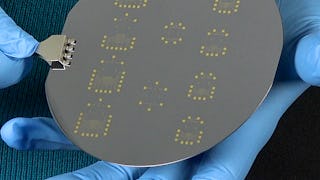
Duke University
Skills you'll gain: Materials science, Engineering, Scientific, and Technical Instruments, Analytical Chemistry, Analytical Testing, Laboratory Techniques, Chemistry, Manufacturing Processes, Laboratory Equipment, Laboratory Research, Laboratory Procedures, Chemical Engineering
Technion - Israel Institute of Technology
Skills you'll gain: Materials science, Engineering, Scientific, and Technical Instruments, Semiconductors, Innovation, Biomedical Engineering, Chemistry, Electrical Engineering, Analytical Testing, Analytical Chemistry, Manufacturing Processes
Arizona State University
Skills you'll gain: Materials science, Failure Analysis, Semiconductors, Manufacturing Processes, Mechanical Engineering, Chemical Engineering, Chemistry, Engineering, Structural Analysis, Production Process, Laboratory Testing, Mechanics, Physical Science, Process Engineering, Engineering Calculations, Engineering Analysis, Reliability, Technical Standard
Arizona State University
Skills you'll gain: Semiconductors, Electronic Components, Materials science, Electrical Engineering, Electronics Engineering, Mechanical Engineering, Manufacturing Processes, Electronics, Thermal Management, Chemical Engineering, Structural Analysis, Chemistry, Failure Analysis, Breakage Control, Physical Science, Engineering Calculations
Technion - Israel Institute of Technology
Skills you'll gain: Materials science, Engineering, Scientific, and Technical Instruments, Semiconductors, Biomedical Technology, Medical Devices, Sensory Systems Analysis, Chemistry, Analytical Chemistry, Chemical Engineering, Manufacturing Processes

What brings you to Coursera today?
Universitat de Barcelona
Skills you'll gain: Sustainable Development, Sustainable Technologies, Materials science, Education Software and Technology, Analytical Testing, Robotics, Chemistry, Engineering Design Process, Environmental Issue, Molecular Biology, Solution Design, Biomedical Engineering, Emerging Technologies, Innovation, Electronics, Safety Standards, Experimentation, Ethical Standards And Conduct, Health Technology, Physics

Arizona State University
Skills you'll gain: Statistical Process Controls, Process Control, Semiconductors, Quality Assurance, Process Validation, Production Process, Verification And Validation, Electronics Engineering, Manufacturing Operations, Manufacturing Processes, Manufacturing and Production, Manufacturing Standards, Electronic Hardware, Electronics, Hardware Design, Process Improvement, Process Analysis, Microarchitecture, Hardware Architecture, Thermal Management

Moderna
Skills you'll gain: Molecular Biology, Pharmacology, Molecular, Cellular, and Microbiology, Pharmacotherapy, Biotechnology, Biochemistry, Life Sciences, Precision Medicine, Immunology, Pharmaceuticals, Cell Biology, Emerging Technologies, Medical Science and Research, Drug Development, Infectious Diseases, Oncology
Skills you'll gain: Energy and Utilities, Electrical Power, Electrical Systems, Electric Power Systems, Sustainable Technologies, Thermal Management, Chemical Engineering, Power Electronics, Climate Change Mitigation, Electrical Equipment, Mechanical Engineering, Sustainable Engineering, Materials science, Real Time Data, Environmental Engineering, Chemistry, Environmental Issue, Engineering Calculations

Arizona State University
Skills you'll gain: Semiconductors, Electronic Components, Materials science, Electrical Engineering, Electronics, Electronics Engineering, Estimation, Manufacturing Processes, Engineering Calculations

University of Manchester
Skills you'll gain: Biotechnology, Biological Engineering, Sustainable Technologies, Process Engineering, Molecular Biology, Chemical Engineering, Sustainable Engineering, Life Sciences, Biochemistry, Pharmaceuticals, Manufacturing and Production, Materials science, Medical Science and Research, Engineering Design Process, Drug Development, Scalability
University of Colorado Boulder
Skills you'll gain: Semiconductors, Electrical Engineering, Materials science, Electrical and Computer Engineering, Physics, Electronics Engineering, Electronics
What brings you to Coursera today?
In summary, here are 10 of our most popular nanotechnology courses
- Nanotechnology: A Maker’s Course: Duke University
- Nanotechnology and Nanosensors, Part1: Technion - Israel Institute of Technology
- Materials Science for Technological Application: Arizona State University
- Materials Science for Advanced Technological Applications: Arizona State University
- Nanotechnology and Nanosensors, Part 2: Technion - Israel Institute of Technology
- Nanotecnología para un futuro sostenible: Universitat de Barcelona
- Semiconductor Packaging: Arizona State University
- mRNAs as Medicines: Moderna
- Next-Gen. Energy Storage - Battery and Hydrogen Technology: L&T EduTech
- Fundamentals of Semiconductor Characterization: Arizona State University










